Reliable solution for total hydrocarbon analysis with HFID technology
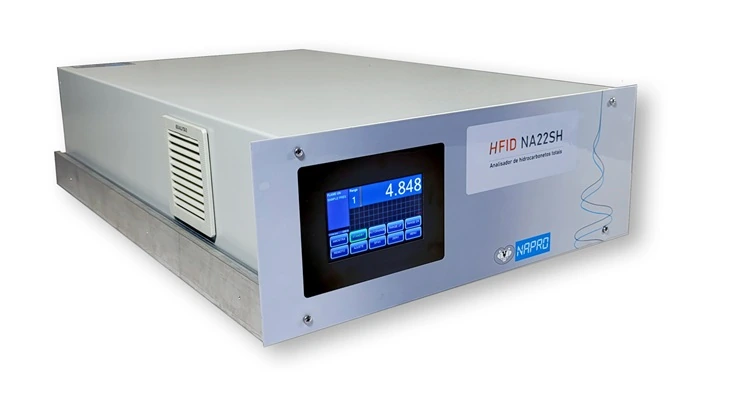
The HFID NA22SH is NAPRO's total hydrocarbon analyser based on HFID (Heated Flame Ionization Detector) technology. The measurement principle consists of introducing a gas sample into a flame between two electrodes: the hydrocarbons ionise in the flame, generating an electrical current proportional to concentration, which is amplified and converted into a concentration value by the equipment's precision electronics.
All components in contact with the sample — inlet filter, valves, lines and measurement chamber — are thermally regulated to prevent condensation and consequent sample loss or contamination, ensuring accurate and repeatable results, especially for evaporative emission measurements in SHED chambers.
- HFID technology — heated flame ionisation
- All internal components with thermal regulation
- Heated inlet filter — prevents condensation
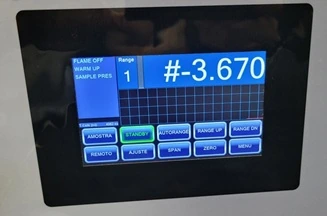
- 5.0" touchscreen display
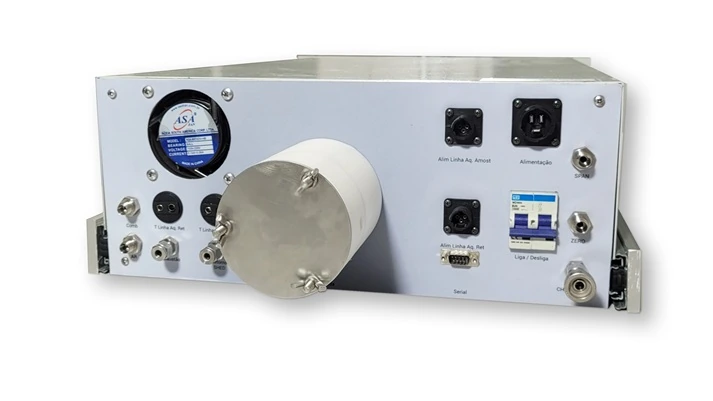
- RS-232 data output
- Dedicated SPAN, ZERO and CHECK ports
- Return valve for unanalysed samples
- Control of up to 2 heated lines